
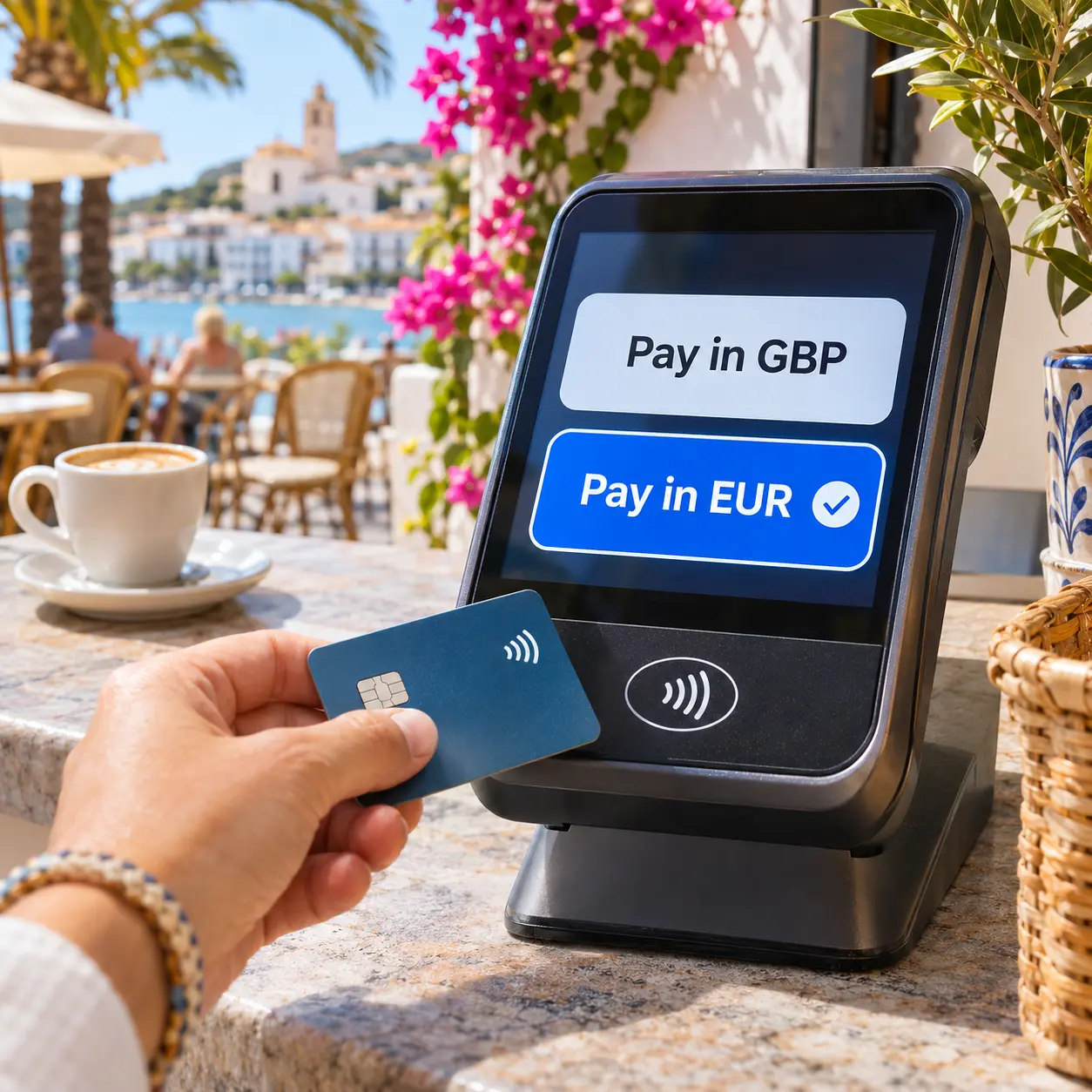
You're on holiday in Spain, ready to pay for a coffee, when the card machine asks: "Pay in euros or pounds?"
It can feel reassuring to choose pounds because you know what you're spending. But choosing pounds often lets the shop, restaurant or ATM convert the payment for you, and its exchange rate may not be the best. This is called dynamic currency conversion.
In most cases, choose the local currency. In Spain, that means euros. Your card provider then handles the conversion, usually using the Visa or Mastercard exchange rate. Your bank or card may still charge a fee, so check its terms before you travel.
Why does the machine offer pounds?
The card terminal is offering to convert the price on the spot. Seeing the total in pounds might feel convenient, but you may be accepting the retailer's exchange rate instead of letting your card provider convert the payment.
Choosing euros doesn't guarantee a perfect rate or mean the payment will be fee-free. It simply avoids handing the conversion to the shop or ATM. MoneySavingExpert and Martin Lewis give the same general advice: choose the local currency.
What about Starling, Monzo and Revolut?
Travel-friendly cards can make spending abroad easier, but their rules differ. Starling says it passes on Mastercard's exchange rate without adding a fee for card spending abroad. Monzo says it uses the Mastercard rate for foreign card purchases, while cash withdrawals can have limits or fees depending on your account and location.
Revolut's exchange fees and allowances depend on your plan. Some customers may face fees after reaching their monthly exchange allowance, and some plans may have a weekend exchange fee. Check your plan details in the app before you go, as terms can change.
A couple of handy tips
- If the machine offers "Pay in GBP" or "Pay in EUR", choose EUR in Spain.
- At an ATM, look for wording such as "Continue without conversion" or "Decline conversion". The ATM may still charge its own withdrawal fee.
- Check your card's foreign spending and cash withdrawal fees before you travel.
- Take a moment to read the screen before confirming. Holiday queues can be stressful, but they rarely improve anyone's exchange rate.
Extra tip: don't leave your currency exchange until the airport
Airport exchange desks often offer poor rates, especially if you turn up and buy currency on the spot. If you want some cash for your trip, compare rates before you go. If you need to collect it at the airport, ordering online in advance may get you a better deal.
The quick rule
When paying abroad, choose the currency used where you are. Euros in Spain, dollars in the US, and so on. And if you need cash, sort it before you reach the airport. Your holiday money deserves a better rate than a last-minute dash past Duty Free.